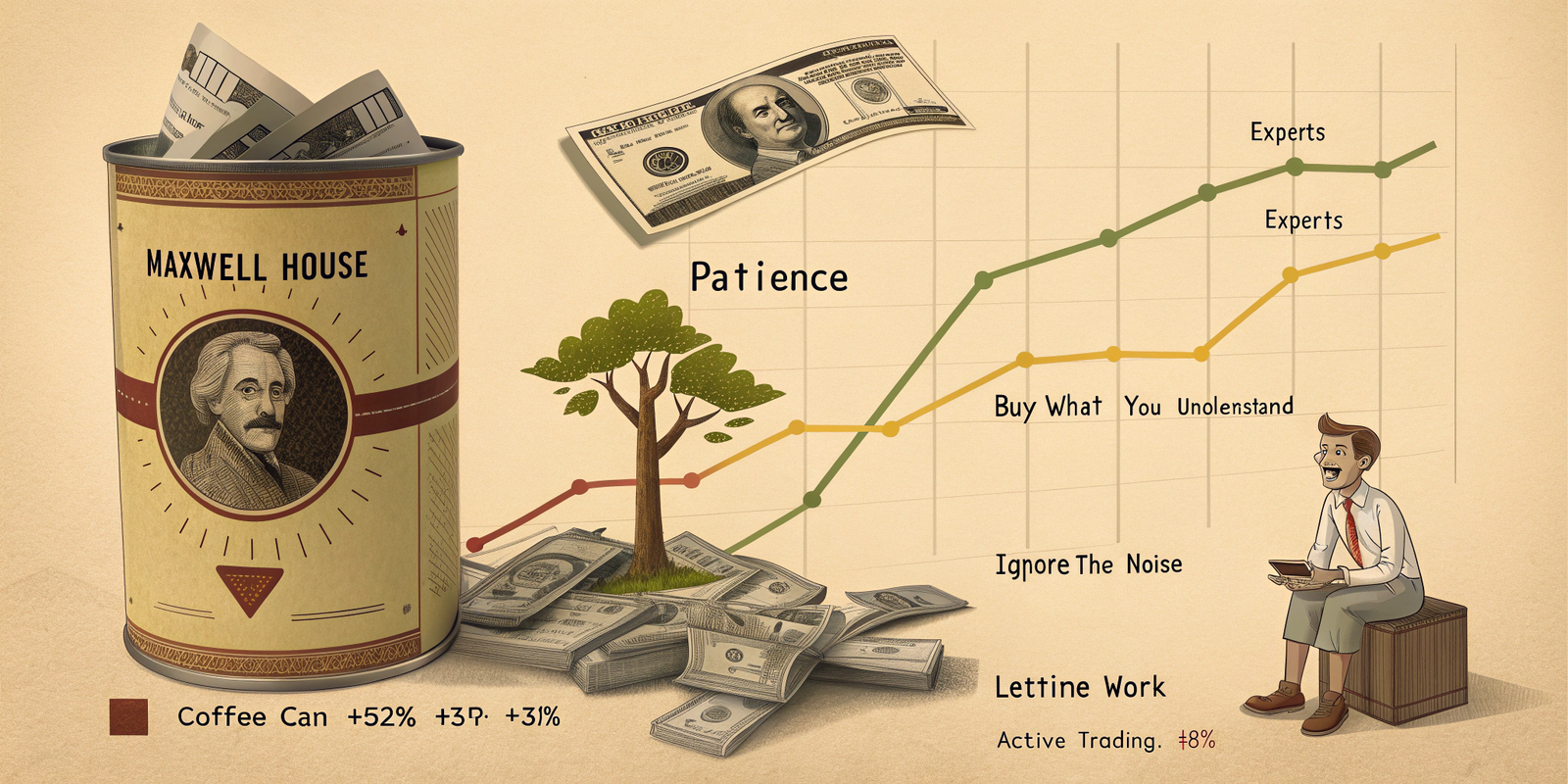
Three years ago, I made what might be the laziest financial decision of my adult life. I bought some stocks, but then I forgot they existed. Not on purpose — life just got busy, you know? Kids, work, that whole thing where you blink and suddenly it’s December again.
Turns out that “strategy” — if you can even call it that — just outperformed every single managed fund and financial expert I’ve been casually following.
I’m talking about beating them by a lot. Like, embarrassingly so.
How I Accidentally Stumbled Into This
Let me paint you a picture. It’s early 2021, and I’m having what I can only describe as a full-blown market anxiety attack. You remember those weeks. When everything felt like it was on fire and everyone on Twitter was either getting rich or going broke on GameStop?
I was checking my trading app fifty times a day. My wife caught me looking at stock prices during our kids’ soccer game. At a funeral. During a romantic dinner.
Finally, she sat me down and said, “Look, either this investing thing works for us, or it doesn’t. But it can’t keep making you crazy.”
She had a point. I was becoming one of those people who talks about their portfolio at parties. Nobody wants to be that guy.
So I did something that felt completely wild in time. I picked about eight companies — stuff I understood and used — bought equal chunks of each, and then deleted every trading app from my phone.
Cold turkey. Done.
The Coffee Can Concept (Thanks, Grandpa)
My grandfather used to keep important stuff in an old Maxwell House coffee can. Not just any stuff — we’re talking birth certificates, some cash, his war medals. Things that mattered.
“Once something goes in the can,” he’d tell me, “it stays there until you need it. No peeking, no moving things around.”
That memory hit me right around the time I was ready to throw my phone against the wall over some Tesla price swing. What if I treated my best stock picks like items in Grandpa’s coffee can?
The concept isn’t exactly revolutionary. Buy good companies, hold them for years, ignore the daily noise. But man, it’s harder than it sounds when you’re living through it.
My Embarrassingly Simple Rules
After losing money on crypto tips and “can’t miss” opportunities, I came up with four rules that a fifth-grader could follow:
The Dinner Table Test: Can I explain what this company does to my family without getting weird looks? If it takes more than one sentence, I’m out.
The Decade Question: Will my kids still be using this product or service when they’re adults? Electricity — yes. Whatever app is trending this week — probably not.
The Competition Check: How hard would it be for someone to create a direct competitor tomorrow? Hard for Coca-Cola’s brand. Pretty easy for most tech startups.
The CNBC Filter: If they’re talking about it constantly on financial TV, I’m probably already too late to the party.
These aren’t sophisticated. They’re barely even rules. But they kept me from doing anything foolish.
What Went in My Can
I’m not going to pretend I’m Warren Buffett here. I made mistakes—some real head-scratchers. But the approach was working despite my occasional poor judgment.
The Surprisingly Boring Winners
There’s this regional utility company—one of those that people always brush off, saying it’s got zero room to grow. Somehow, it’s up 180%.
Then there’s a consumer goods brand that makes the kind of stuff you toss into your cart without a second thought. Quietly, it’s climbed about 120%.
And a healthcare firm that’s been around longer than my parents have been alive? It’s delivered a solid 85% gain, slow and steady.
The Facepalm Moment
Meanwhile, the flashy tech startup that everyone swore would “change the game”? Yeah… it’s down 65%, and still sinking.
But here’s the kicker: even with that painful tech nosedive, my overall returns were outperforming nearly everything else I was tracking. Go figure.
The Night I Nearly Blew It
October 2022. You remember that chaos, right? It felt like the economy was unraveling thread by thread.
I was lying awake at 1:30 in the morning, staring at the ceiling, mentally calculating how much I’d “lost” on paper.
The Night I Almost Ruined Everything
October 2022. You remember that month, right? When did it feel like the whole economy was coming apart?
I’m lying in bed at 1:30 AM, doing math in my head about how much money I’d “lost” on paper. My portfolio was down maybe 25% from its peak, and I was convinced I was an idiot for not selling earlier.
I downloaded my brokerage app again. Had my finger on the sell button for everything.
My wife rolled over and asked what I was doing.
“Damage control,” I mumbled.
“Wasn’t this supposed to be a long-term thing?”
Sometimes the most intelligent person in the room is the one who’s not trying to be smart. I put the phone away and somehow managed to fall asleep.
Six months later, everything had not only recovered but hit new highs. Best non-decision I ever made.
The Results That Made Me Uncomfortable
After three years of basically ignoring my investments:
My forgotten portfolio: +52% S&P 500: +31% My friend’s actively managed fund: +19% My neighbor’s day-trading experiment: +8%
The numbers felt almost unfair. My friend Jake spent hours every week researching, following expert recommendations, and optimizing his allocation. I spent maybe two hours total over three years.
But the real victory wasn’t the extra percentage points. It was getting my sanity back. I stopped checking financial news obsessively. Started sleeping through market volatility. Actually paid attention during conversations instead of sneaking peeks at stock prices. The relief and peace of mind that came with this simple, long-term approach were truly reassuring.
Why This Drives People Crazy
Most people can’t handle this approach, and I get it. We’re programmed to want action, to feel like we’re doing something productive with our money.
Social media makes it worse. Everyone’s posting about their latest win, their crypto moonshot; their options play that paid off. The boring success stories don’t get likes.
Plus, the financial industry has zero interest in you buying eight stocks and forgetting about them. How do they make money off that? They need you trading, adjusting, optimizing, paying fees.
But wealth — real, lasting wealth — is built on patience, not excitement. And patience is probably the most undervalued skill in investing.
Starting Your Coffee Can
Want to try this? Here’s how I’d do it if I were starting over tomorrow:
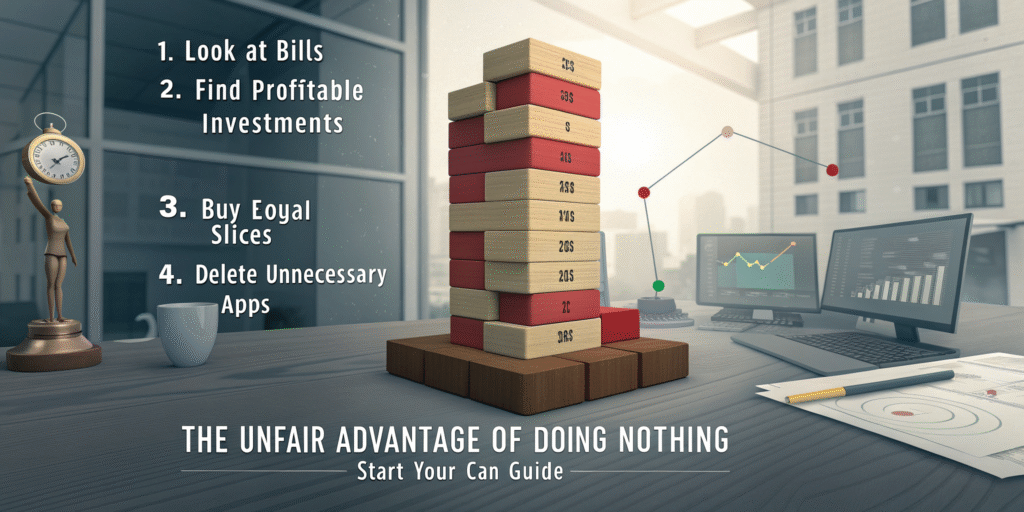
Look at your monthly expenses. Who are you already paying money to? Your utility company, phone provider, and the place where you buy groceries. These are businesses with built-in customers — you.
Find 6–10 companies that have been profitable for at least five years straight. Don’t overthink it. Don’t try to find the next Amazon. Just find companies that make money consistently.
Buy equal amounts of each. Set a calendar reminder for a year from now. When it goes off, set another one for the following year.
The hard part isn’t picking stocks. It’s ignoring them afterward.
What This Taught Me
This whole experience was about more than investing. It was about learning when not to act.
We live in a culture that worships optimization and constant improvement. But some things get better when you leave them alone. Gardens need time to grow. Relationships need space to develop. And portfolios need time to compound.
The financial world wants you to believe investing is complicated because complexity sells products. But building wealth is simpler than anyone wants to admit.
My grandfather’s coffee can wisdom turned out to be pretty sophisticated after all.
Share this content: