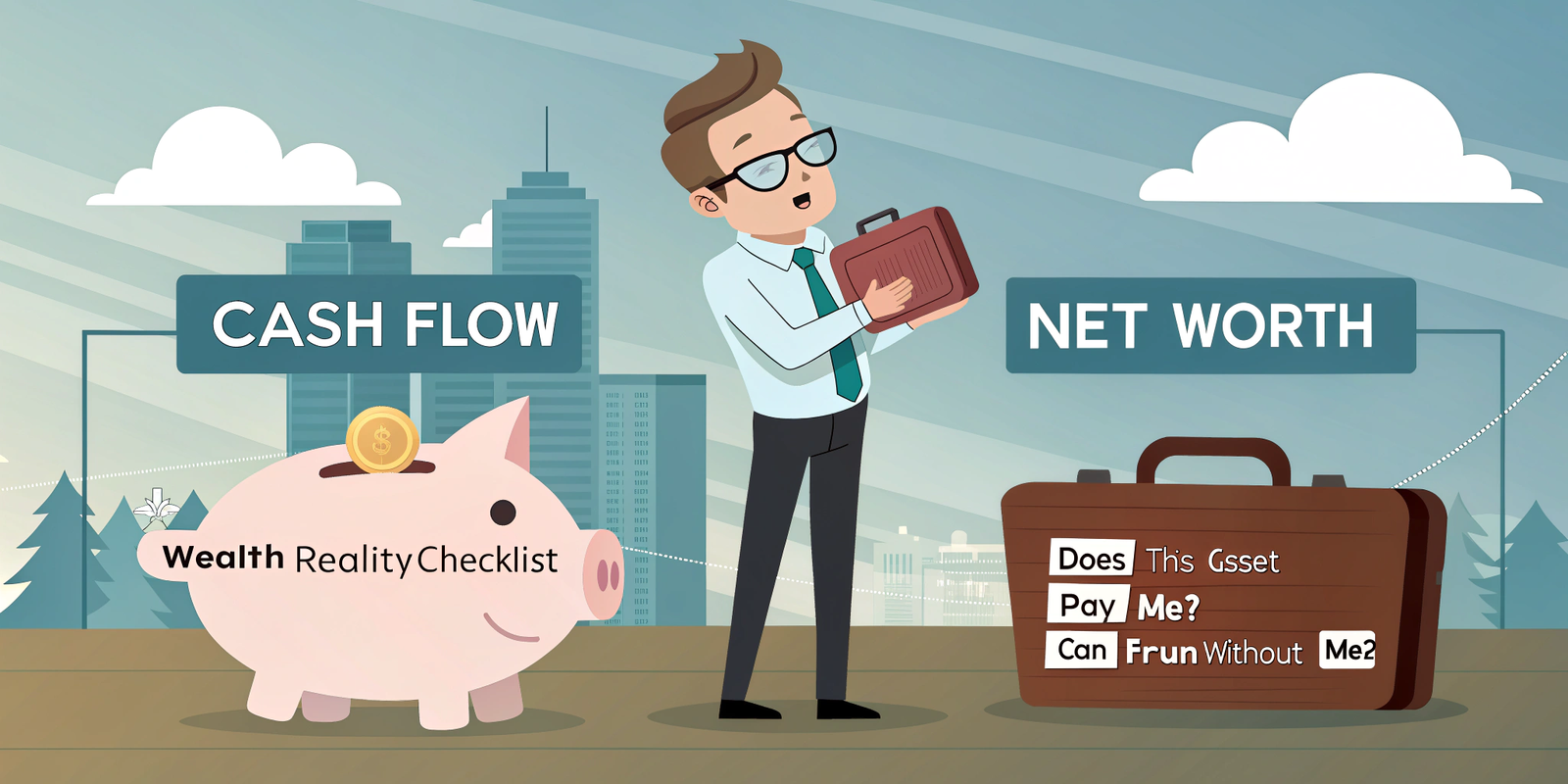
If you want to be good at ANYTHING, you should master learning as much as you can about whatever it is that you want to be good at.
I had a pretty good track record of becoming borderline obsessed with many things in my life that I was passionate about.
Cycling, martial arts, and DJing were all hobbies that I loved at one point.
I would learn everything I could about each of those, which in turn impacted my performance as a DJ, martial artist, or competitive cyclist, and helped me play on a much higher level.
I also applied that to sales & marketing, consuming as much knowledge as I possibly could about those topics and then reaping the rewards that came from that knowledge.
In 2018, I realized that a lot of people (including myself) want to be ‘good at money’ yet have very little real knowledge about the topic.
Most people will say things like ‘well, I’m just not good at money’ as if there are certain people who are born with the knowledge of money.
Most people have a fundamental level of financial education in their lives, which has a direct impact on their financial future.
The empowering truth is that anyone, regardless of their current financial situation, can start to educate themselves about money and take control of their financial future.
I know when I made a hard commitment to learning as much as I could about money and finance, shortly after my wealth started to grow exponentially.
The Financial Term That No One Talks About
When it comes to money, I often hear people talking about:
- Having a high net worth.
- Having a high income.
- How much is their stock selling for?
- How much is Bitcoin selling for?
Understanding financial terms like cash flow can be a relief, as it is the separator between the truly wealthy and those with a high income or net Worth, and miles apart from the poor and middle class.
Income: this is how much money you make from your job, your business, or your assets.
Right now, the median household income is around $80k, meaning half the population makes more and half the population makes less.
Sure, having a ‘high income’ is beneficial. Still, we all know many people who have a high income but virtually no wealth because they spend just as much as they make.
Robert Kiyosaki used to describe this as the ‘rat race’; as you make more and more money, your expenses grow as well. Some people call this ‘lifestyle creep’.
Expenses: This refers to money going out. This is your car, house, bills & play money.
Of course, it’s essential to be managing your expenses. Still, most people (and a lot of financial gurus) profess cutting your costs as a way to get wealthy.
Like David Bach’s‘ latte factor’, suggesting that one could skip the $8 Starbucks every day and invest that into an account and have a million dollars in 30 years.
The problem with that is there is only so much you can cut out of your budget, and you end up being miserly (a ‘tight wad’ as one of my friends puts it).
In my opinion, that should only be a temporary fix to get you out of a bad situation because I see a lot of ‘tightwads’ that have plenty of money but live in absolute scarcity because they still act like they are poor.
Net Worth: This is the total of all of your assets minus your liabilities.
Most people consider their primary residence an asset. Still, it’s not an asset since you always need a place to live. If you were to sell it, you would need to buy or rent another place to live.
People typically count their cash, savings, investments, retirement accounts, and home as their assets.
Then they will subtract their liabilities, such as loans, credit card debt, and mortgage, to get their net Worth.
Having a high net worth is certainly better than having a low or no net worth.
The problem with focusing on net Worth is that you need a lot of it to stop working and live a good lifestyle. Using the standard 4% rule that people often talk about when it comes to money and retirement, you need around $2.6 million to retire with a 6-figure income and not outlive your money. That’s a significant number for most people.
Capital Gains: This is one of the most absurd concepts around money that is widely accepted as a path to wealth.
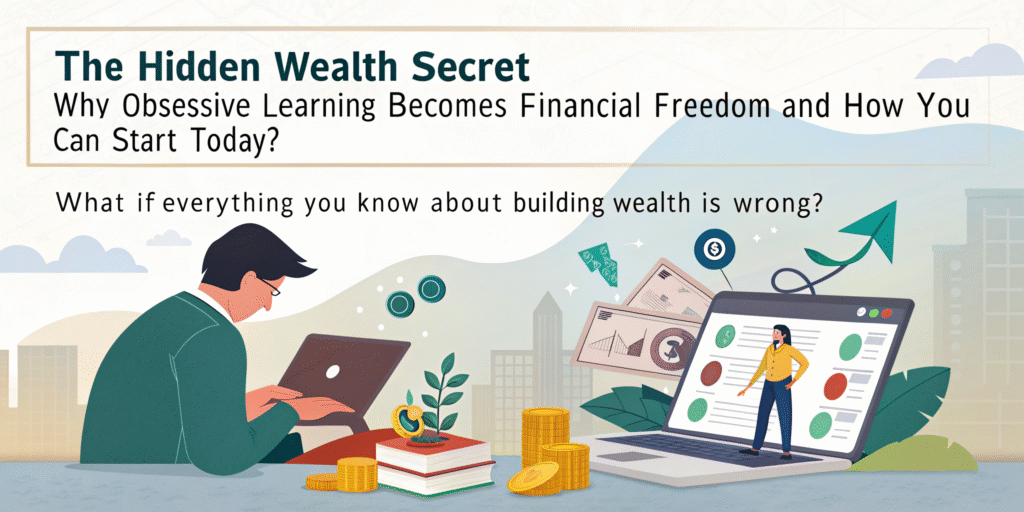
A capital gain (or loss) occurs when you buy an asset for one price and sell it for a profit (or loss) at a later time.
The difference in what you paid and what you sell for is your capital gain (or loss).
We’ve built a multi-trillion-dollar industry around getting people to trade stocks and bet on their financial future, essentially hoping they pick the right asset and sell it at some future time to someone else who will pay more for it.
I participate in the stock market and have retirement accounts in place. Still, I also understand that these gains are almost entirely out of my control. Think about how we obsess about stock market prices. We become glued to CNBC and panic when the stock market is down, even if we are years away from needing to tap into that money.
In reality, the only time that price matters is the day you buy a stock and the day you sell it. What remains is your capital gain (or loss).
When it comes to trading, 95% of mutual funds and hedge fund managers can’t beat the S&P 500.
The vast majority of us would be much better off automating investments in the S&P500 consistently over a long period.
You’ll almost be guaranteed to have respectable gains; however, to achieve a 6-figure income in retirement, you’ll need to end up with $2.6 million, which is a tall order for most people.
Start very early in life, and you’ve got a much better chance.
Now Let’s Talk About Cashflow…
Cash flow refers to the movement of money in and out of a business, project, or financial product over a specific period. It’s a crucial indicator of a company’s liquidity and its ability to meet its financial obligations. Cash flow is distinct from profit, which is the money left after deducting expenses from revenue.
On a personal level, cash flow is your income minus expenses.
If you have a high income and low expenses, you have good cash flow and start to build wealth.
If you have high income but the same money going out every month, then you aren’t getting anywhere. That’s the problem with focusing on your income; it doesn’t tell the whole story. By focusing on cash flow, you can manage your finances in a way that moves the needle and keeps you from running on the never-ending income treadmill.
Here’s the problem with focusing on your net Worth: once you stop working, that pile of money starts to deplete at a rapid pace.
We put so much emphasis on cultivating a high net worth, but when you stop working, it starts deflating like a balloon with a hole in it. Your retirement account after you stop working becomes a negative cash-flowing asset.
Let’s not forget that net Worth can swing wildly.
If you were about to retire in 2008 during the Great Recession with $1 million in net Worth, you would have had half of that by the end of the year when you needed to start tapping into it.
Cash Flowing Assets
The wealthy stop working for money and start having money work for them by creating or buying cash-flowing assets.
A cash-flowing asset is something that can replace you as the asset and produce cash flow regardless of whether you are there or not.
Examples could be:
- A real estate investment property.
- A business, especially one that doesn’t require you to be there.
- A digital product that can be created once and sold over and over, infinitely.
- Intellectual property.
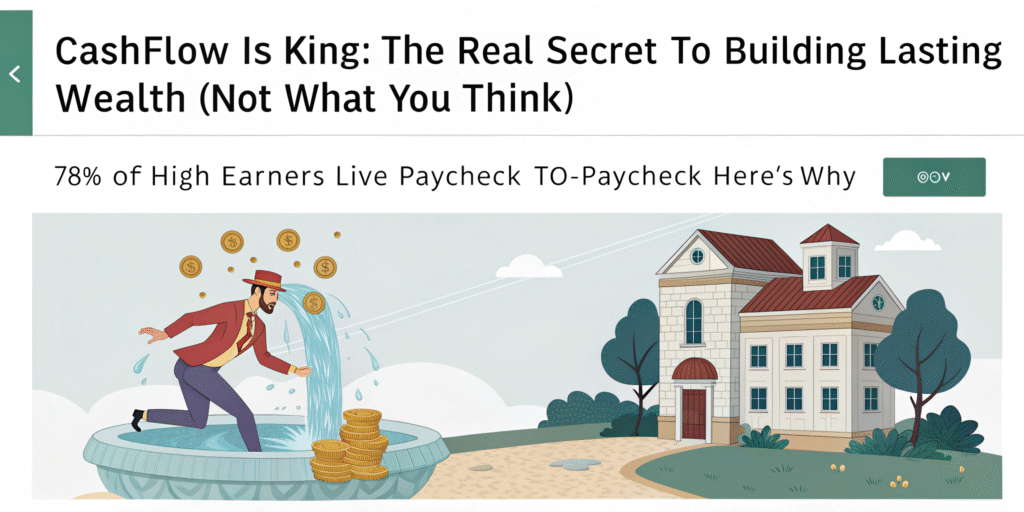
The beauty of cashflowing assets is that they don’t require you to sell them to create income, and often they continue to increase in value.
There’s a lot of hype around bitcoin, but once you sell it, you’re left with just your capital gain, and it can no longer generate income for you.
Same with your retirement account.
Reaching Escape Velocity (Financial Freedom)
Create a passive income ‘ecosystem’ that feeds itself.
To be truly financially free, it should not be about having a high net worth, high income, or a nest egg that can withstand a 4% withdrawal rate over 30 years.
In my opinion, true financial freedom is:
- Cash flow from your assets exceeds your expenses.
- You don’t need to be working (you can remove yourself from the equation).
- You don’t need to sell off your assets to produce income.
- Your assets continue to increase in value AND pay you.
Imagine if more people spent their working years creating (or buying) cashflowing assets instead of trying to build up this big pile of money that depletes once you stop working.
Pro Tip: The wealthy also don’t sell their assets when they need more money; they borrow against them (because debt is tax-free) and let the asset pay back the loan.
They also transfer their assets to their kids, which resets the ‘cost basis’. This bypasses a lot of capital gains taxes.
My Strategy
Once I started understanding the importance of cash flow, I shifted my focus from trying to put away as much money into investments and retirement accounts and started building actual assets. I first started buying ‘dividend-paying stocks’ because they generate some cash flow.
Later, I started creating passive income through courses, digital products, and affiliate marketing, which are all cash-flowing assets that work on my behalf. I then started using the cash flow from those assets to buy investment properties, which have other wealth-building benefits like tax depreciation and having your renters pay down the loan while the property increases in value.
I hope some of the things I shared today help you on your journey to creating financial abundance.
Share this content: