Tip #1. Bulls and bears can both make money, but pigs get slaughtered.
Early in my career, I shared an office with a man a few years older than me who was investing in stocks. I hadn’t yet accumulated a significant nest egg, but I’d always had a saver mentality. Learning about investments seemed the logical next step. Jim educated me about his approach to buying individual stocks and managing his portfolio.
Jim cautioned me against attempting to time the market or jumping into some hot new stock I’d heard about, the up-and-coming thing that could make me a fortune. “Bulls and bears can both make money,” Jim Wisely said, “but pigs get slaughtered.” That is, when it comes to investing, don’t try to get rich quickly or in one bold (rash) move. Admittedly, patient and methodical investing isn’t exciting. But it works, with a lot less risk, effort, and worry.
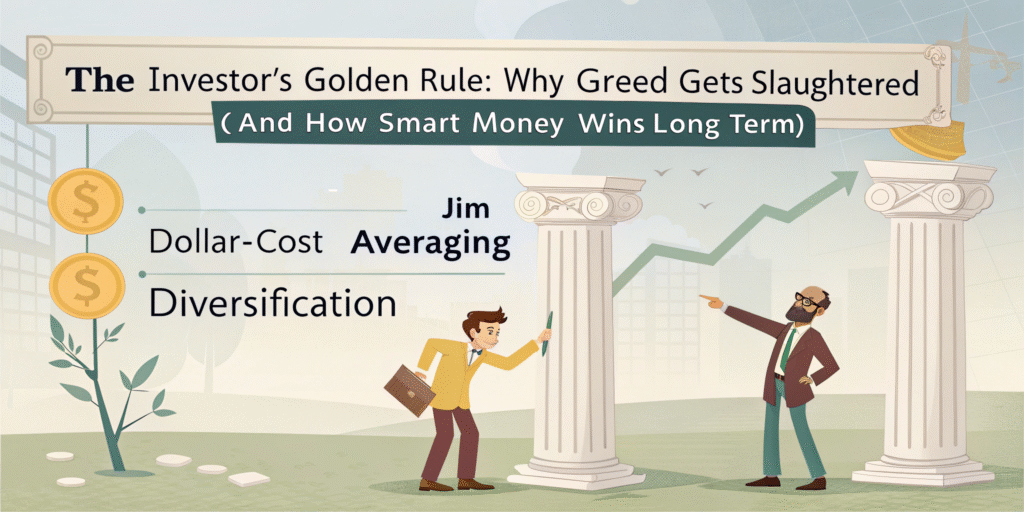
An effective technique is dollar-cost averaging, investing the same amount of money at regular intervals to build up your holdings of a stock, mutual fund, or other asset. As prices fluctuate, your steady purchases will acquire fewer shares when prices are high and more shares when they dip. This strategy lowers the average cost of your holdings and damps out the impact of market volatility. It also means you don’t need to check the prices daily to determine whether to buy or sell. Setting up an automatic investment plan based on dollar-cost averaging makes investing simple and effective.
Diversification is another essential strategy to build wealth and reduce risk. You might be tempted to put all of your eggs into one basket that promises a fabulous yield. Cryptocurrencies offer that temptation these days, but there’s always been some “sure thing” investment opportunity being hawked by people who want your money. They usually don’t work out.
It’s smarter, and safer, to accrue a portfolio that contains a variety of assets: stocks, bonds, mutual funds, and ETFs (exchange-traded funds), money market funds, cash, gold, and yes, crypto if you like. This diversification provides a safety net, ensuring that you’re not overly reliant on any one investment. You can adjust the distribution of assets to align with your risk, goals, and changing needs and markets over time.
Sure, the stars all align just right and the timing is perfect. In that case, you can make some spectacular high-return investments, like my friend who long ago bought stock in two small companies called Microsoft and Apple. It’s far more likely, though, that today’s boom will be tomorrow’s bust, or that you’ll be late jumping on (or off) the bandwagon.
I stepped into that trap just once, based on a tip I got from a colleague. There were some initial soaring gains, but then, over two years, I watched my $36,000 investment gradually turn into … $2,000. Eventually, I decided to view that stock purchase as entertainment, not an investment. Fortunately, it wasn’t my life savings, just one of many assets I had acquired.
I’ve always diversified into a variety of assets that complement and balance one another. The percentage of the market’s upside that I capture exceeds the rate that I lose in down markets. That’s a success over the long haul, even if it’s not glamorous.
Tip #2. Save all you legally can for retirement.

More than forty years ago, another wise colleague told me, “The people I know who are most financially comfortable in retirement had saved every dollar they legally could in tax–deferred retirement accounts.” These include traditional and Roth IRAs (individual retirement accounts or arrangements), 401(k) employer-sponsored personal pension accounts, and the like. Tax-deferred plans put more of your money to work than making after-tax investments, letting them grow substantially through compounding over the years.
My friend’s observation was a good idea. I set up IRAs for myself and my wife. I fully funded them every year, including making extra catch-up contributions after age 50. I also took advantage of my employer’s 401(k) program, having a contribution deducted from each paycheck and invested (see dollar-cost averaging above). Some employers will match your 401(k) contributions; don’t turn down free money!
You’ve probably heard the advice to “pay yourself first” as a way to accrue your savings. Investing in a 401(k) plan is a great way to do that. My employer at the time also had a profit-sharing program. Rather than taking my annual bonus in cash and having a big party or taking a fancy vacation like many people did, I rolled the money directly into my 401(k) account. That let me avoid paying taxes on it and helped make saving for retirement automatic and painless.
When I left that company and started my own business, I learned about the SEP-IRA, or Simplified Employee Pension Individual Retirement Arrangement. This plan allows self-employed people to save a substantial percentage of their income in a tax-deferred account. As my business income grew, I threw the maximum amount I could into the SEP-IRA retirement bucket each year, too.
These retirement savings strategies worked. I was able to retire early, living primarily on the income from our savings until my wife and I began receiving Social Security payments. The concise message: Pay yourself first, every month, in a tax-deferred account, and don’t tap those funds except for retirement or an emergency. The long-term benefits of this approach are significant, and it’s worth the effort, even if it means making some sacrifices in the short term.
Tip #3. Pay off your credit card bill every month.

When I was 16 and starting college, my father got me a credit card with a $300 limit. I was appalled. I didn’t want to have anything to do with living on credit or borrowing money. (This was in 1970, when youth rebellion was going full blast.) I was wrong; it was a smart move on my father’s part.
Dad coached me on the appropriate way to use a credit card: as a convenience, not a way to buy things I can’t afford. I also learned the value of building up a credit history, showing future lenders for major purchases like houses and cars that they could trust me to pay them back. He stressed, “Pay the credit card bill in full every month.” Past-due payments incur enormous interest charges and can trash your credit score.
I took my father’s advice to heart. Except for one time when there was a miscommunication, I’ve paid off all of my credit card statements on time for more than fifty years. That one month I slipped, I wrote to the credit card company, who kindly reversed the late payment and interest fees for me. As soon as my statement arrives in the email each month, I verify all the transactions to ensure that nothing’s awry and then pay the bill.
As a result of my history of timely payments, I have an impressive credit score. This reduces what I pay for things like automobile and home insurance premiums. I have only a few credit cards, ignoring all the offers I receive to get Yet Another Card with fabulous “benefits” I don’t need.
Learning how to use credit wisely is an important life skill that all young people need to acquire. Thanks, Dad.
Tip #4. If you need to borrow money for a vacation, you can’t afford it.

Before I met my wife, she had a friend who loved to travel. She would invite Chris to join her, but often Chris would say, “Sorry, I can’t afford it. I have to pay my mortgage.” Chris’s friend thought she could borrow the money for these expeditions, but Chris and I share the philosophy that you don’t buy things you can’t afford. We’ve always saved our cash until we had enough to pay for whatever it was we wanted to buy or do.
Borrowing for nonessentials is a slippery slope. You’re short one month, so you pay only part of the credit card bill. The rest accrues horrendous interest. You might need a bank loan to try to catch up. The cycle continues, while the bank smiles. In general, borrowing money just for fun stuff isn’t a good idea.
As an example, I have a friend who never met a toy he didn’t like. Jake would get a loan to buy a new motorcycle or camp trailer. Still, then he wouldn’t get the raise or bonus he was expecting at work, and he’d be struggling again to make monthly payments. Although he earned a decent salary, Jake wound up owing his parents more than $20,000, which he never repaid. He now has minimal savings and assets at age 70. His only income is from Social Security.
I’ve never been comfortable going into debt for things I might want but don’t need. Other than a small loan from my parents for a guitar amplifier when I was 15, I’ve had only one modest car loan and three home mortgages, all paid off early. Maybe my friend had more fun than I did with all his toys, but I’ve never felt deprived. Instead, I prefer the security of buying things only with money I already have.
Tip #5. You don’t save money in a store.

When I walked into an electronics store to buy my first home audio system, a salesman shared a helpful observation. As I inquired about how much I could save off the listed price, he pointed out, “You save money in a bank, not in a store.” Interesting; of course, you spend money in a store. Even if you can spend less than what the price tag says or less than you might have spent elsewhere, you aren’t really “saving” money.
Vendors of all kinds, from supermarkets to auto dealerships, try to impress you with how much you can save by making your purchase there today. I learned to focus on how much money was coming out of my pocket, rather than any alleged savings.
I’m not shy about inquiring if any discounts or coupons are available, inviting the salesperson to match an online price, or asking, “Can I do any better on the price?” And now I often ask service providers if they offer a senior discount. I “saved” thousands of dollars with that simple question when I had my house re-sided a few years ago. But I still spent many thousands more on the job. Don’t confuse a discount, a reasonable price, or smart shopping with actual savings.
Share this content: