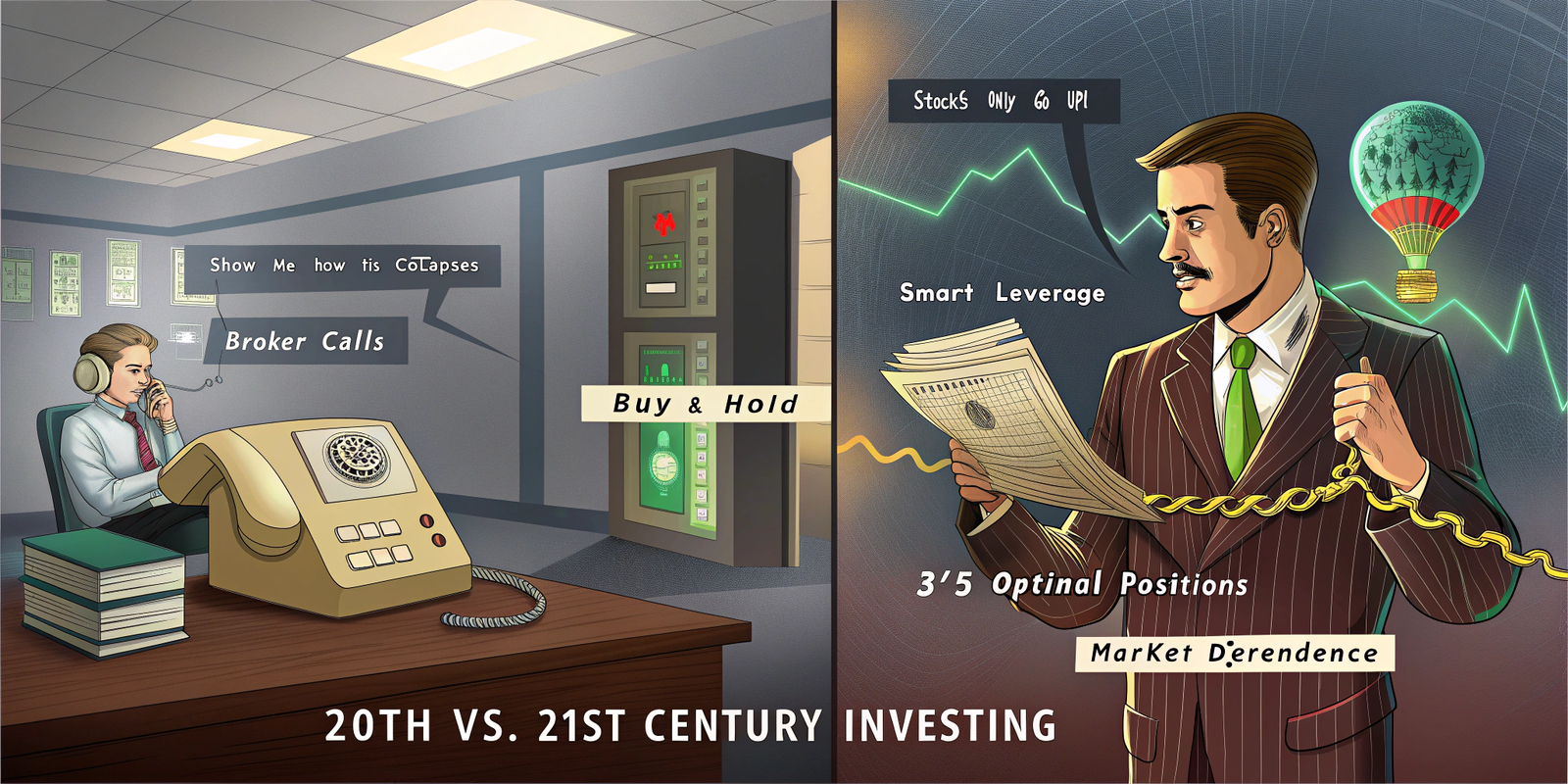
We have a tool in front of us that can make us millionaires. Imagine a tireless thinking machine at your disposal, capable of delivering in seconds what used to take weeks of research, years of experience, and a network of experts. Can scan documents, compare assets, calculate risks, identify patterns, and present scenarios you haven’t even considered. Available to any with an internet connection, offering a world of possibilities for your investment journey.
But it can also make you poor.
Not because it’s wrong. But it makes you comfortable. Because you use it to validate your own biases, to justify decisions you’ve already made, to wrap yourself in narrative instead of facing raw reality. The problem isn’t the tool. It’s the questions you ask, and how you process the answers. AI is not an oracle. It’s a mirror. And that mirror can show you a sharper version of yourself for a dulled one, if you don’t know how to interrogate it.
Most people are still investing as if we were in the 20th century, using outdated rules for a new game. It’s time to adapt to the digital era. By diversifying horizontally, accumulating assets with structure, and focusing on cash flow, you can make decisions that align with the modern investment landscape. It’s time to think differently and embrace the tools and strategies of the 21st century.
However, the consequences of not adapting to modern investing strategies can be significant.
Meanwhile, a quiet minority is becoming wealthy in the 21st century because they think differently. Because they live on cash flow. Because they build portfolios based on principles, not hype. They use AI to expand their system, rather than to fill gaps in knowledge.
The leap is brutal.
Still investing like it’s the 1990s? It’s like launching a camera company in 2025… while everyone else has an iPhone in their pocket. You’re already behind. Not because the market is unfair. But because you’re using the wrong tools for a game that’s already changed.
The real disruption isn’t in the asset.
It’s in how you think. In speed. In the ability to ask questions others never consider. And in the courage to face answers that make you uncomfortable. Today, the game belongs to those who ask better questions. And if you use these tools wisely, you don’t need 30 assets or 40 ETFs. You need a simple system. Three to five well-selected assets. Margin for error. Liquidity. Cash flow. Optionality. Structural intelligence. The rest is noise.
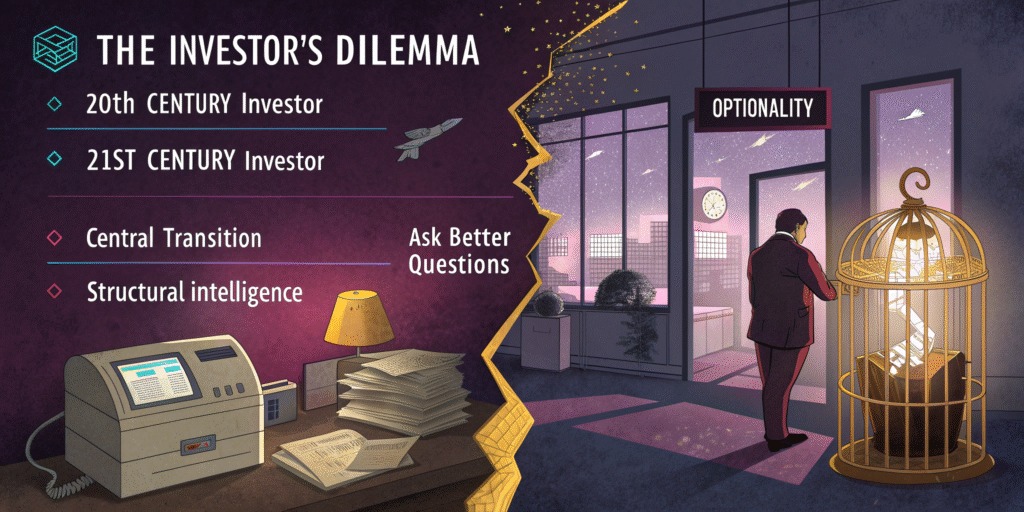
So here are 10 prompts that, if you use them intelligently, with friction, and ask AI to drop the politeness, can radically change the way you invest.
They can make you a millionaire.
Literally.
And the last three will surprise you.
Let’s get to it:
1. “Explain the top 3 macro reasons why this asset could collapse in the next 12 months.”
Don’t start with optimism. Start by looking for fragility. This forces the AI to search for structural weaknesses, not strengths. Tell it to think like a short-seller, a skeptic, a risk manager. Ask it to strip away the hype and give you the cracks beneath the surface. You’ll find that by studying what can break, you begin to understand what might endure.
2. “Compare this asset to 3 hated or ignored assets that generate reliable monthly cash flow.”
Markets misprice things not because of logic, but emotion. What’s hated is often underpriced. What’s ignored is often an overlooked opportunity. Ask the AI to scan for assets with positive yield, solid fundamentals, and low narrative attention. Let it build you a list of unpopular but productive assets. That’s where asymmetry often hides.
3. “Give me a realistic strategy to live off the monthly cash flow this asset could produce without ever selling it.”
Investing for appreciation alone is speculative. But if an asset can produce a stable cash flow, you can structure a lifestyle around it. Ask the AI to calculate realistic yield, break down tax impact, and simulate different jurisdictions or legal structures. What you want is a flow engine—something you could hold forever and live from.
4. “How can I use smart leverage or good debt to amplify this position without endangering my core cash flow?”
Leverage is not the enemy. Misused leverage is. Ask the AI to model downside risk, stress test margin calls, simulate variable interest rates, and show you the thresholds where your system would break. If you have flow, you have flexibility. But only if your debt structure supports the rhythm of your life, not just your spreadsheet.
5. “Give me three specific ways to retain liquidity and optionality if I decide to buy this asset.”
Optionality is the oxygen of antifragile investors. Ask the AI to help you structure layered liquidity through derivatives, partial positions, proxy ETFs, or using credit lines backed by the asset. Always be in a position to move. Never get trapped, no matter how confident you feel.

You have the other 5 available in the Asymmetric Finance newsletter.
To apply it right now:
- Open your AI of choice (ChatGPT, Claude, Gemini).
- Paste each prompt, one by one.
- Give it context: your goals, current assets, risk tolerance.
- Ask it to remove positive bias and act like an independent analyst.
- Use the answers to upgrade your system.
Don’t invest like it’s the 20th century.
You already have an iPhone.
Use it.
Used poorly, AI will trap you in narratives.
Used well, it can build you a life that never depends on the system again.
Share this content: