Forget the Moon Talk: Here’s What the Data Says About Bitcoin’s Future
Look, I’ll be honest with you — I’m tired of hearing the same “to the moon” Bitcoin hype. It’s exhausting. But once in a while, something comes along that’s worth paying attention to. And I think this new Bitcoin adoption report from River Financial, a highly respected source in the industry, might just be one of those things.
Let’s get real for a minute. No jargon, no hype — just straight talk about what’s going on with Bitcoin today. And more importantly, what it means for you and me.
The Truth: Bitcoin is Still Ridiculously Early.
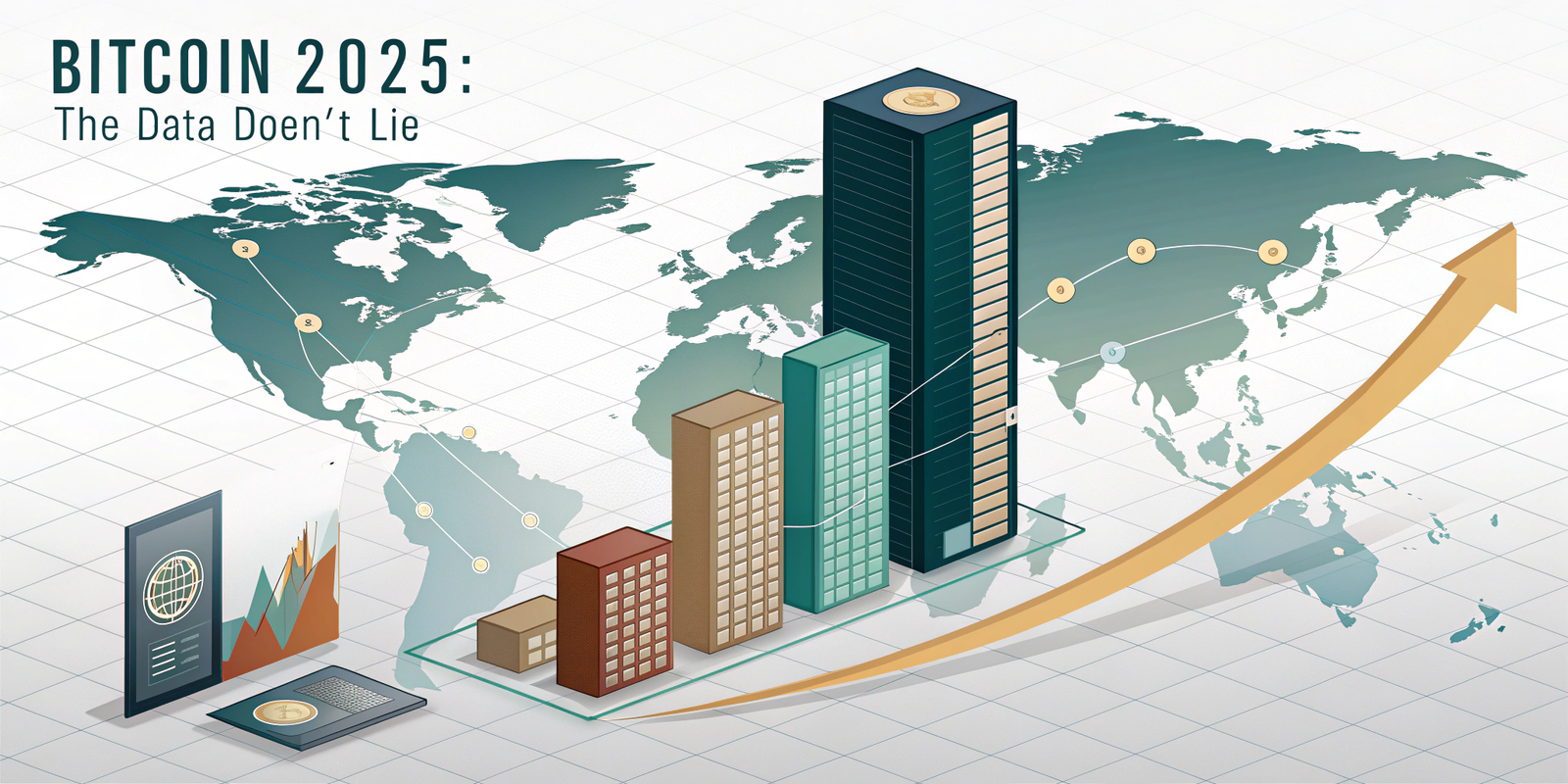
A recent report took a good, hard look at Bitcoin adoption and made a pretty wild claim: In 2025, Bitcoin adoption is at just 3% of its full potential.
Yeah, 3%. That means we’re still 97% early.
I get it — sounds like some catchy marketing trick. But actually, the way they got to that number makes a lot of sense. They compared Bitcoin’s current adoption stage with past revolutionary technologies in their early days:
- Bitcoin in 2025: 3% adoption
- Internet in 1990: 3% adoption
- Online banking in 1996: 3% adoption
- Social media in 2005: 3% adoption
Think about it. Imagine if you had realized the internet’s potential back in 1990. Crazy opportunity, right? Well, Bitcoin’s sitting in the same spot now, it’s weird to think we could be this early, but the numbers don’t lie. The report looks at three big things:
1. Global Ownership (Who Owns Bitcoin?)
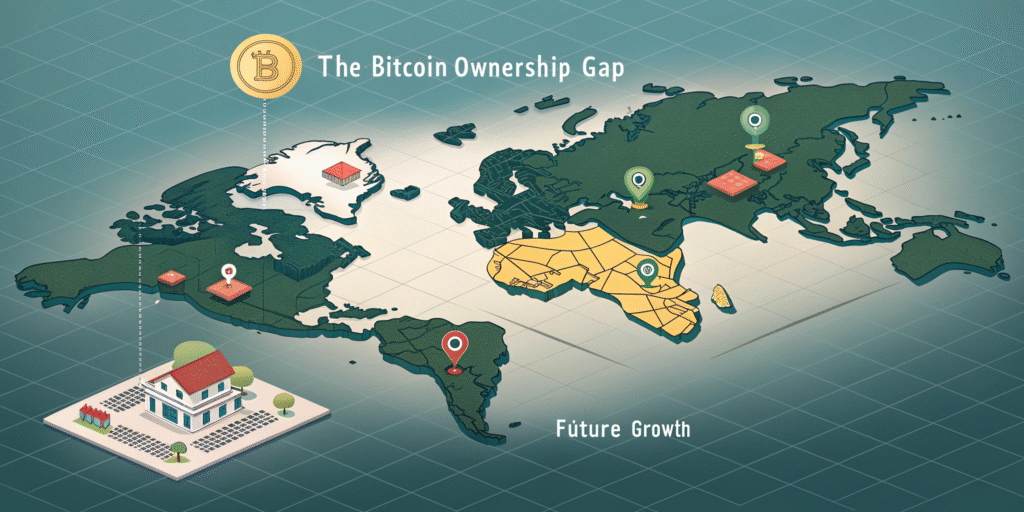
Right now, fewer than 4% of people worldwide own Bitcoin. In America, it’s about 14%. Outside the U.S.? Even lower — somewhere between 1.6% and 6.6%.
If Bitcoin eventually becomes mainstream like other investment assets (think stocks or gold), that ownership figure could grow significantly, presenting a long-term investment opportunity. For context, about 31% of U.S. households hold traditional investment assets. Bitcoin still has a long way to go.
But there’s also a catch. Even if a lot more people own Bitcoin someday, most of the wealth could end up concentrated among fewer people — just like stocks today. (I know, kinda depressing, but worth knowing.)
2. Institutions are Way Behind (This Part is Huge)
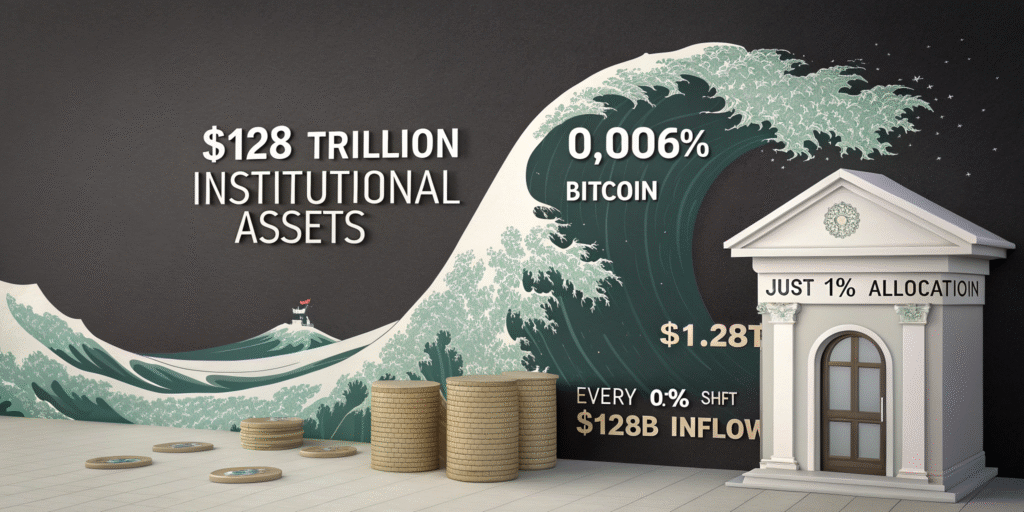
It is the part that honestly blew my mind. Right now, U.S. investment advisors (the big guys managing $128 trillion) have just 0.006% of their portfolios in Bitcoin.
Seriously, that’s barely anything. If Bitcoin’s share just matched its tiny fraction of global wealth (0.2%), it would mean $249 billion more flowing into Bitcoin from institutions alone.
Imagine if they got even slightly more ambitious. If institutions eventually put just 1% of their money into Bitcoin, that alone would mean massive, potentially market-changing inflows, highlighting its future growth potential.
3. Bitcoin’s Market is Way Bigger Than You Think
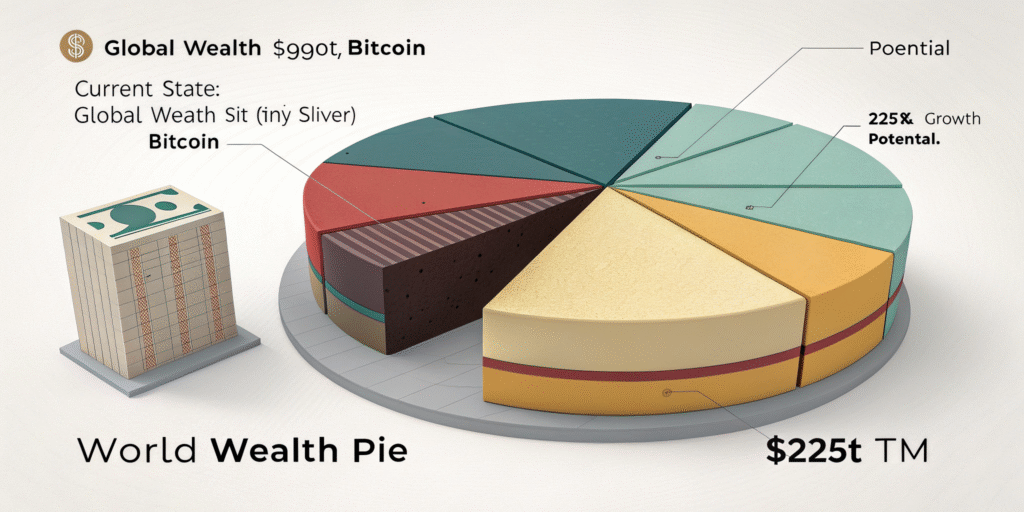
Alright, this is a little abstract, but stay with me. Bitcoin’s Total Addressable Market (TAM) is basically “how big Bitcoin could realistically get.” River estimates it at about $225 trillion — around 25% of all the world’s wealth.
Now, before you roll your eyes, they didn’t just randomly pick a number. They estimated how much money currently sitting in other assets (real estate, bonds, gold, equities, art) might realistically move into Bitcoin:
- 30% of the funds are stored in currencies
- 30% of bonds
- 50% of gold
- 15% of equities
- 15% of real estate
- Plus some smaller fractions from fine art and collectibles.
That’s optimistic (I know) — but not impossible, especially over the long term (like really long term).
Bitcoin’s Network is Stronger Than Ever
The technical side is pretty impressive:
- Bitcoin nodes (computers that run the Bitcoin network) doubled in number since 2021. They grew another 11% just last year (to around 22,000 reachable nodes).
Hashrate (the computing power securing the network) has been exploding, averaging 107% growth every year since 2016. Last year alone, it grew 55%.
That’s like having a security team that’s constantly doubling in size to protect your money. Pretty reassuring, right?
But there’s a little wrinkle: mining pools.
These are groups of miners who join their computing power together, and right now, just three pools control over 60% of Bitcoin’s hashrate. It’s a bit centralized, which isn’t ideal (gives me chills). But the good news is, miners can easily switch pools if any shady stuff happens — like censorship or messing with transactions.
What’s Driving Bitcoin Adoption?
It’s not just random hype — there are clear trends pushing adoption:
- Individual adoption: More regular people are learning about Bitcoin every day.
- Institutional adoption: Big financial institutions are warming up (spot ETFs are now happening).
- Business adoption: Companies are starting to hold Bitcoin without freaking out over legal issues.
- National adoption: Countries have begun considering Bitcoin as a serious financial asset (El Salvador was just the start, trust me).
So, What Does All This Mean for You?
Forget the moon talk and all that noise for a second. Here’s the simple truth:
“If you’ve ever wondered if you’re ‘too late’ to Bitcoin, you’re not.”
“In fact, according to all these metrics, we’re incredibly early. It is like recognizing the potential of Amazon when it was still selling only books.”
But remember, being early doesn’t mean getting rich overnight. Real adoption takes time, and Bitcoin is still risky (but a lot safer than before). Prices will swing around a lot. But if your mindset is long-term (and patient!), the odds start looking good. (not a millionX but maybe in 10–15 years 100X doesn’t sound a dream to me)
Look, I’m not here to sell you anything. Bitcoin isn’t magic. It’s a seriously promising financial innovation at a stage where you still have plenty of room to get involved comfortably. And with its increasing adoption and strong network, it’s a safe bet for your investment.”
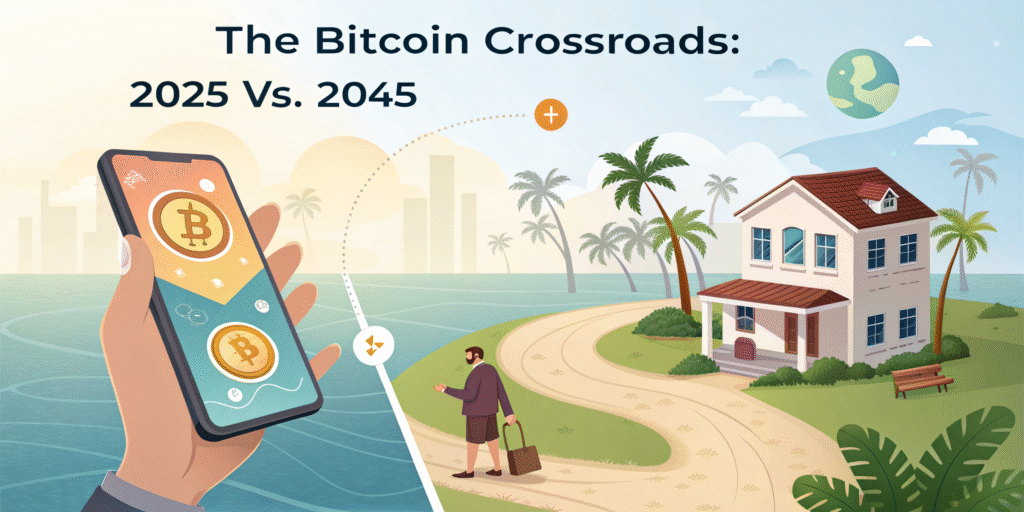
In 10 or 20 years, you might look back and think, “Man, I’m glad I paid attention back in 2025.” Or you might wish you had—no hype — just the truth.
Will Bitcoin hit millions per coin?
Honestly, who knows. But even a fraction of the growth projected by this report would still be amazing.
Worst-case scenario, you learn a bit about the future of money. Best-case scenario, we get that beach house somewhere warm and pretend we knew it all along.
Either way, it’s worth paying attention to this stuff. The numbers here aren’t flashy predictions — they’re sober analyses by people who know what they’re talking about.
And hey, if Bitcoin ever hits these numbers, you and I can celebrate with something fancy — but let’s promise to never actually say “to the moon” in public, okay?
“Money moves in cycles, patience wins, and most people panic at precisely the wrong time. That’s what we cover here at Freedom Finance — real market moves, actual strategy, none of the usual nonsense.
We’re also running a $100 Portfolio as a public experiment. No magic formulas, no hype — just seeing what happens when you invest small, stay consistent, and make decisions like an actual investor. Because if you can’t manage $100, why would you handle $10,000 any better?”
Share this content: